

Back to BlogTPMS Sensors
What Is a TPMS Sensor, and Why Does That Warning Light Matter?
July 8, 2026 5 min readBy T&H Tire And Auto Service
That little tire-shaped light on your dash is not just a nuisance — it is protecting your fuel economy, tire life, and safety. Here is how it works.
What TPMS actually does
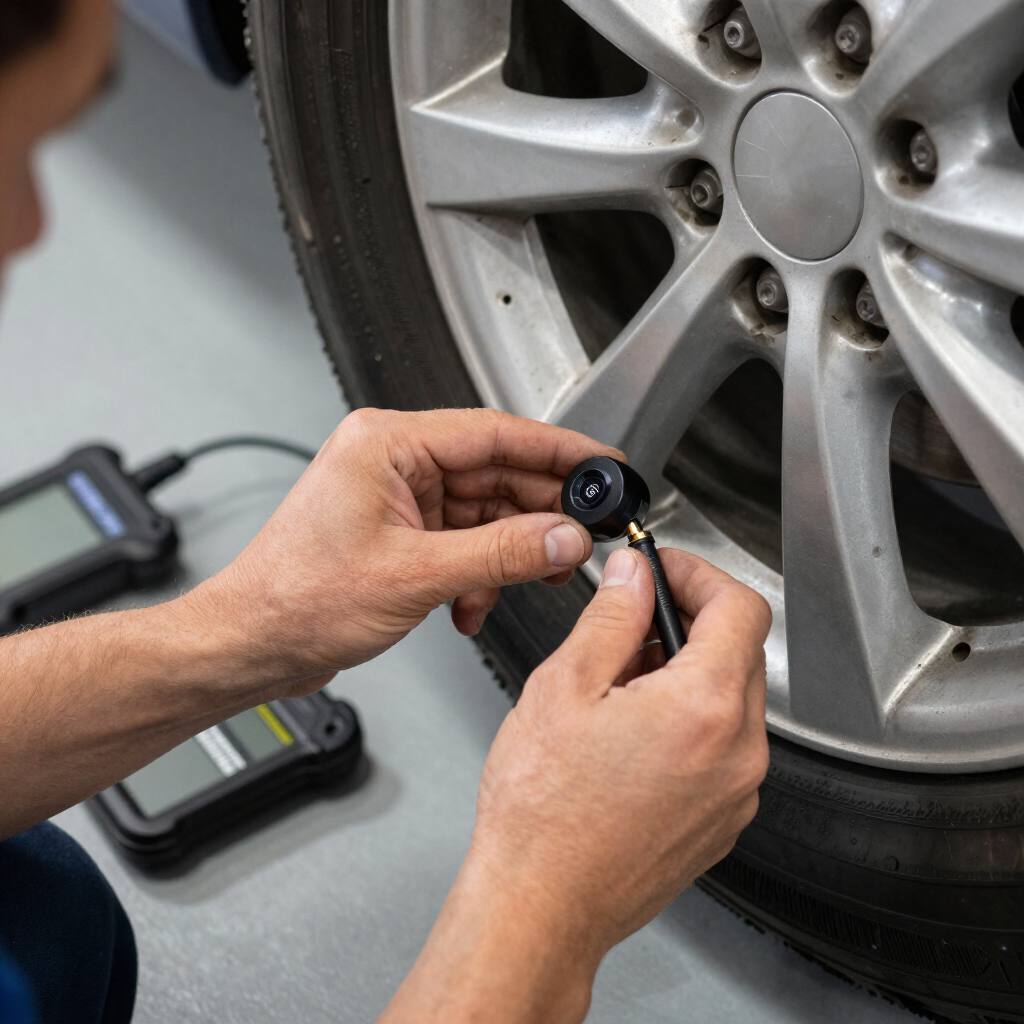
Every vehicle sold in the US since 2008 is required to have a Tire Pressure Monitoring System, or TPMS. A small sensor mounted inside each wheel measures air pressure in real time and sends that data wirelessly to your dashboard, warning you the moment a tire drops significantly below its recommended pressure.
Why underinflation is a bigger deal than it seems
Driving on an underinflated tire increases rolling resistance, which hurts your fuel economy, and it causes the tire to flex more than it was designed to, generating extra heat that leads to premature wear and a higher risk of blowout at highway speed. TPMS is your early warning system against all of that.
Why the light sometimes comes on for no obvious reason
Tire pressure drops about 1 PSI for every 10-degree drop in outside temperature, so it is common for a TPMS light to trigger during the first cold snap of the season even without a leak. Still, treat every alert as worth checking — a slow leak from a nail or a failing valve stem looks identical on the dash to a temperature-related drop.
When the sensor itself needs replacing
TPMS sensor batteries typically last 5-10 years, and the sensor is usually replaced whenever you get new tires mounted, since it sits inside the wheel next to the valve stem. A sensor that shows a permanent fault code, rather than a fluctuating pressure reading, usually means the unit itself has failed and needs replacement rather than just reprogramming.
Do not ignore a solid or flashing TPMS light
A steady light means a tire is significantly underinflated right now. A flashing light usually means a sensor fault. Either way, stop by T&H Tire And Auto Service and we will diagnose it with factory-grade equipment, check all four corners, and get you back on the road safely, usually same day.
Need this looked at in person?
Our team offers free inspections at 3602 Old Hickory Blvd.
Questions & Answers
Frequently Asked Questions
Common questions our technicians hear about tpms sensors.
A flashing TPMS light (usually for 60 to 90 seconds then staying solid) indicates a sensor malfunction or fault, not just low pressure. A solid light means one or more tires are significantly underinflated.
Still have a question? Contact our team or give us a call and we will walk you through it.
Ready to get your vehicle checked?
Our ASE-certified team is ready to help with tires, brakes, oil changes, suspension, and more.